
Fabric Wholesalers in Europe: How to Source Textile Stock Efficiently
Introduction
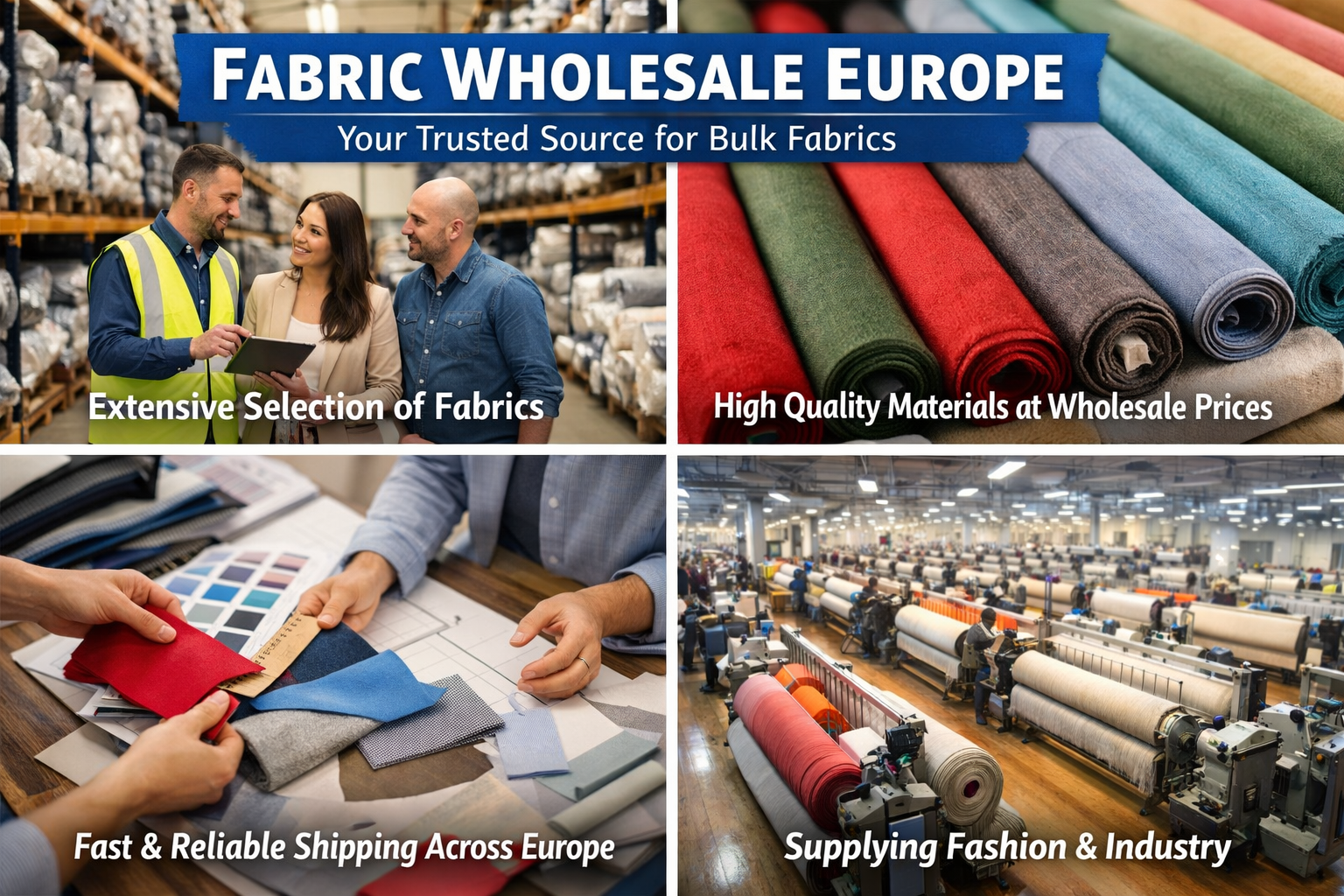
Europe remains one of the most important regions for textile sourcing, offering
a wide range of fabric wholesalers that serve fashion brands, fabric stores,
and textile businesses of all sizes.
Understanding how fabric wholesalers in Europe operate helps businesses
source textile stock more efficiently, reduce costs, and access diverse materials
suited to different production needs.
What Are Fabric Wholesalers in Europe?
Fabric wholesalers in Europe act as intermediaries between textile producers,
manufacturers, and businesses that require fabric stock for commercial use.
They typically operate at scale and offer access to a wide variety of materials.
European wholesalers may specialize in:
- Large-volume wholesale fabric
- Surplus and deadstock materials
- Mixed fabric lots
- Seasonal or discontinued stock
This diversity makes Europe an attractive sourcing destination for international buyers.
Why Source Fabric Stock from European Wholesalers?
Strategic Location and Logistics
Europe benefits from well-developed logistics networks, making it easier for
businesses to source and transport textile stock efficiently across borders.
High Quality Standards
Many European wholesalers operate under strict quality controls, ensuring
consistent fabric standards and clear documentation.
Access to Surplus and Deadstock Fabrics
European markets are particularly strong in surplus and deadstock sourcing,
allowing businesses to access quality fabrics at competitive prices.
Types of Businesses That Work with European Fabric Wholesalers
European fabric wholesalers typically serve a broad range of clients, including:
- Fashion brands producing small or medium collections
- Fabric stores and textile retailers
- Designers working on limited editions
- Textile professionals sourcing materials for projects
Many businesses choose to work with experienced fabric suppliers to ensure
flexibility and reliability when sourcing from multiple European markets.
Key Factors to Consider When Choosing Fabric Wholesalers in Europe
Minimum Order Quantities
Some wholesalers require large minimum orders, while others offer more flexible
options suitable for small and medium businesses.
Stock Consistency and Availability
Surplus and deadstock fabrics may vary in quantity and composition, making
clear communication essential.
Export Experience
For international buyers, working with wholesalers experienced in exports
simplifies customs procedures and logistics.
Sustainable Fabric Sourcing Through European Wholesalers
The importance of reducing textile waste is widely recognized within the European
textile industry, with institutions such as the European Commission highlighting
the need for circular economy practices in textile production.
Here is an article from the European Comission talking about: https://environment.ec.europa.eu/topics/circular-economy/textiles_en
This sourcing model helps businesses:
- Reduce textile waste
- Lower material costs
- Support circular economy practices
Businesses exploring sustainable sourcing options often collaborate with
reliable fabric suppliers that specialize in surplus and deadstock stock.
How to Start Sourcing from Fabric Wholesalers in Europe
The sourcing process typically involves:
- Identifying sourcing needs and fabric requirements
- Exploring suitable European markets
- Contacting wholesalers with relevant stock
- Evaluating samples and conditions
- Proceeding with logistics and purchasing
Clear communication and realistic expectations are key to successful sourcing.
The Role of Europe in the Global Textile Supply Chain
Europe continues to play a key role in the global textile supply chain due to its
longstanding manufacturing expertise, established sourcing networks, and strong
focus on quality standards. Many international businesses rely on European fabric
wholesalers to access reliable textile stock while maintaining flexibility in
their sourcing strategies.
The presence of surplus and deadstock materials within European markets also
creates opportunities for businesses seeking sustainable and cost-effective
fabric sourcing solutions.
Conclusion
Fabric wholesalers in Europe offer businesses access to diverse textile stock,
competitive sourcing options, and established supply chains. Understanding how
these wholesalers operate allows brands, fabric stores, and professionals to
make informed sourcing decisions and build reliable partnerships.
Looking for flexible fabric sourcing options in Europe?
Contact us to discuss your sourcing needs and explore suitable fabric suppliers.

Pingback: What Is Deadstock Fabric? | European Supplier Guide 2026